
Patios and Walkways Set to Stay Level
Hardscaping in Laurel for older concrete edges, small patios, and paver borders that have shifted or need resetting
Many lots in West Billings and around Laurel were developed with small back patios and concrete walks that are now showing uneven joints, shifted pavers, or edges that have migrated out of alignment over years of use. Plains Wolf Lawncare, an owner-run crew based in the Billings area, handles lighter hardscaping work on these properties alongside lawn care and bed maintenance so the same team addresses what's underfoot and what's growing around it. The work uses hand tools and light equipment, which suits patio-scale projects and walkway resets without the site disruption that heavy machinery brings to a finished yard.
On a typical paver or stone installation, the crew sets and levels each unit, fills joints with the appropriate material, and clears all debris from the work area before leaving. The leveling step is where most shortcuts get taken—pavers that look flat on installation day develop visible tilt as the base material beneath them settles unevenly if it wasn't properly compacted at each layer. Because this work is done at a smaller scale using hand tools rather than plate compactors on a large excavated base, it's best suited to patios, walkways, and edging borders rather than full driveway replacements or large-scale retaining walls.
Arrange an on-site look at your patio or walkway so Plains Wolf Lawncare can assess what's shifted and what approach fits the existing layout.
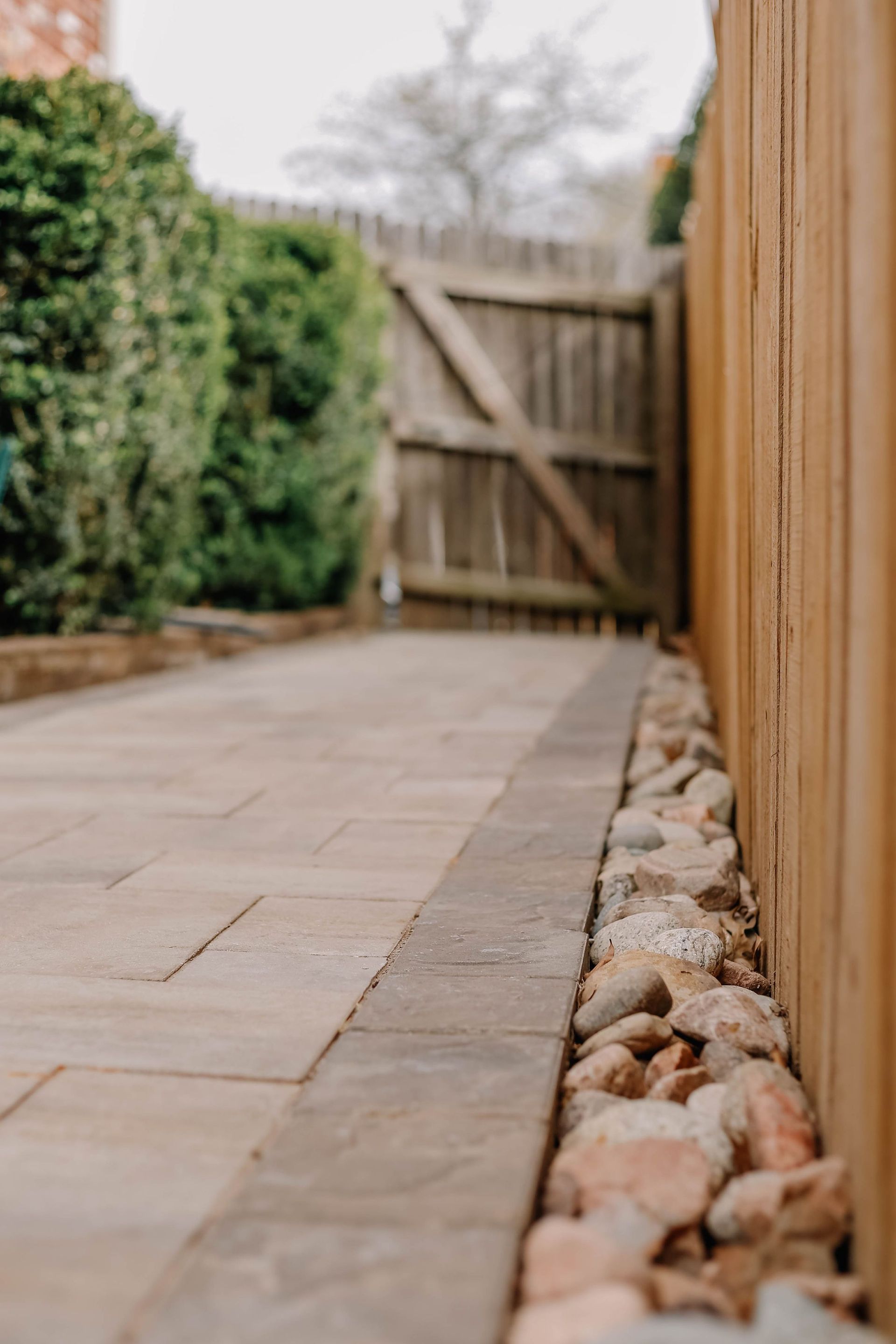
How Light Hardscaping Gets Done Correctly
The decision about whether a paver needs to be fully reset or just releveled starts with understanding what caused it to move in the first place. A paver that has dropped on one side because the base material eroded from below needs different treatment than one that has heaved upward because tree roots have grown beneath it. Identifying the cause before pulling units saves work and prevents the same problem from returning after the surface is closed back up. That diagnostic step—reading why something moved rather than immediately replacing it—is where experienced judgment separates a lasting fix from a repeat call.
Once the work is finished, you'll notice that surface water no longer pools at the low point that developed in the shifted area, and foot traffic across the patio doesn't catch on an edge that sticks up. Joint material filled consistently across the surface also closes gaps that previously allowed material to migrate out from between units over time. Plains Wolf Lawncare keeps the scope of each project aligned with what hand tools and light equipment can accomplish properly, which means clients know what they're getting rather than a scope that expands once work is underway.
Because hardscaping is offered alongside lawn care and landscape bed work, clients who want a patio reset and new bed edging installed in the same visit can arrange both through one crew. Work that combines surface and planting changes is easier to schedule and sequence when it comes from one team rather than coordinating separate contractors who may not account for each other's finished work.
What Property Owners Ask About the Work
The questions below focus on how lighter hardscaping work is scoped, sequenced, and finished, particularly for the patio and walkway scale that suits hand-tool installation and resetting.
What kinds of hardscaping projects are a good fit for hand-tool and light-equipment work?
Patios, walkways, border edging, and small paver reset projects are well-suited to this approach. Large retaining walls, full driveway installations, or projects that require excavating more than a few inches of depth typically need heavy machinery and fall outside the scope of lighter hardscaping work.
How is a paver surface leveled once the units have been pulled?
After the affected pavers are removed, the base material beneath is assessed and adjusted—adding or removing compactable fill to restore a consistent plane before the pavers are reset. Skipping that base work and simply setting the paver on top of what's already there produces a level surface that re-settles in the same pattern within a season or two.
What goes into the joint-filling step after pavers are set?
Joints are filled with a material suited to the paver type and the traffic the surface will see—typically a polymeric sand that resists washing out rather than regular construction sand, which migrates with rain and irrigation. A properly filled joint also limits weed germination in the gaps.
How does the crew handle paver work around existing lawn and bed areas in Laurel-area properties?
Work is staged to avoid tracking material across the lawn, and any disturbed bed area adjacent to the patio is tidied before the crew leaves. Because the same crew handles lawn care and beds on many of these properties, they know where the irrigation lines run and avoid cutting into them during digging or leveling.
What should a finished paver patio surface look like when the work is complete?
Units should sit flush with one another with no visible tilt at edges, joints should be consistently filled with no large voids, and the surface should drain toward the intended low point rather than pooling in the middle of the installed area.
Plains Wolf Lawncare also performs
hardscaping work in Hesper, Laurel, Park City, Joliet, and Huntley. To schedule a look at your patio, walkway, or border edging project, contact the crew directly to describe what you're working with and set up a visit.