
Edges and Beds Maintained at Every Visit
Trimming in Laurel and the surrounding Yellowstone County area for lawn edges, beds, and shrub lines that grow into walks, siding, and driveways between mowing cycles
Grass edges along older West Billings fences and foundations grow into siding, walks, and bed borders faster than the mowing schedule catches them—and once that growth establishes, clearing it back takes longer than keeping it trimmed in the first place. Plains Wolf Lawncare handles trimming and lighter landscape bed work for homes across Laurel and the surrounding area as part of an owner-run crew that combines trimming with mowing in one service. Because the same people who mow also trim, edges and beds are maintained consistently from visit to visit rather than handed off to a separate crew that doesn't know the property layout.
The crew trims grass edges along walks, drives, and beds, then cuts back overgrown shrubs and perennials to shape without removing more than the growth that's pushing past the intended line. Cuttings are bagged or blown off hard surfaces at the end of the visit—so beds are left edged and clean rather than trimmed but covered in debris. For properties with longer fence lines or foundation plantings that run the depth of the lot, the trimming sequence is planned so every section gets attention in a single visit rather than leaving back sections for next time.
Schedule a property walkthrough to identify which edges and beds need regular maintenance and how often trimming fits into your mowing cycle.
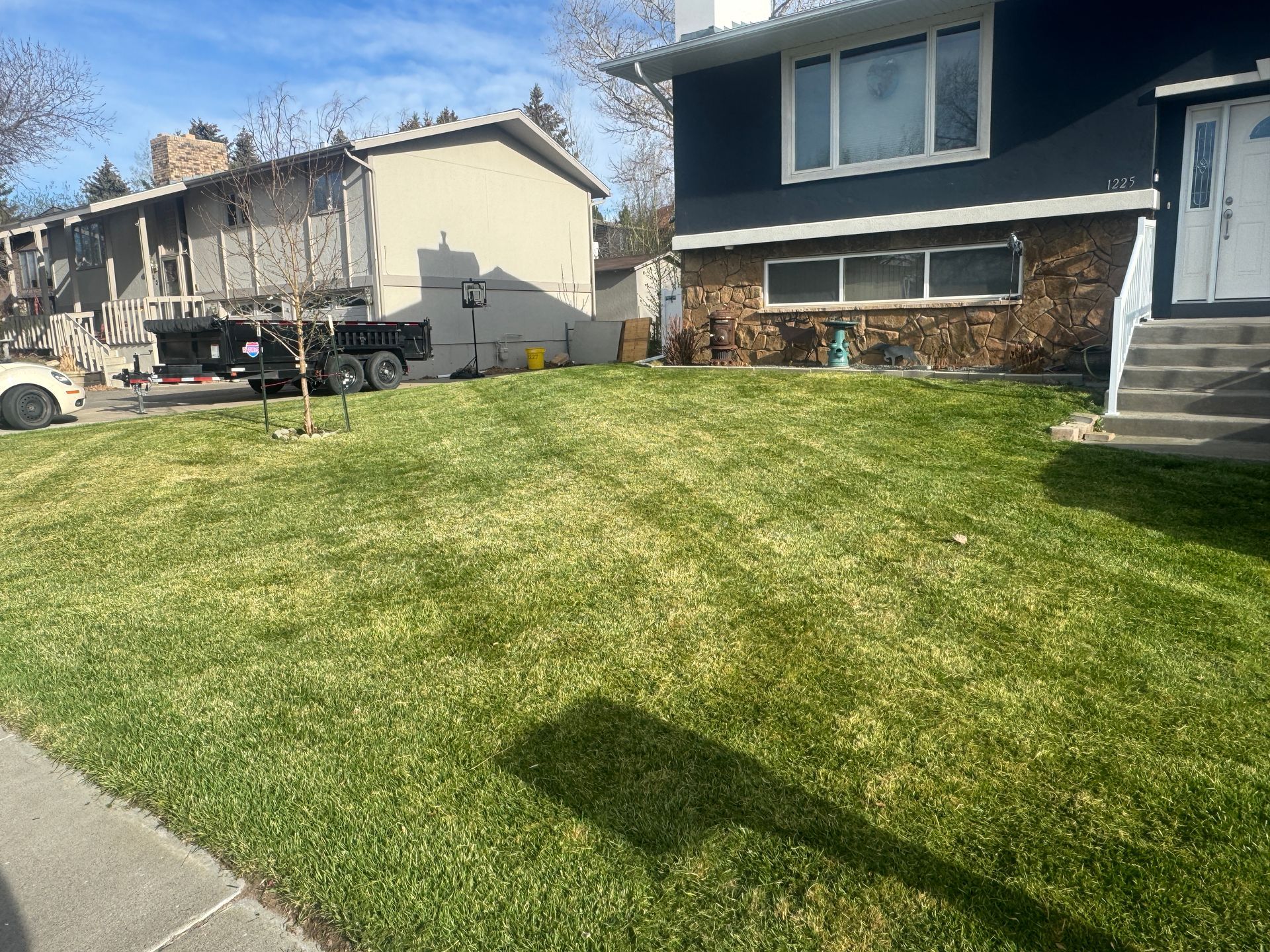
The Difference Between Trimmed and Actually Maintained
Trimming that only addresses the obvious surface growth—a quick pass along the walk edge and nothing more—leaves the growth behind fence posts, at foundation corners, and inside bed borders to accumulate between visits. Those are the spots where overgrowth does the most damage: grass working under siding, growth thickening against fence bases, and bed borders losing their lines until the bed and the lawn become indistinguishable. The crew addresses those detail areas in each visit, not as a separate call-back service.
After trimming, walk edges are clean and defined, bed borders show a clear separation from the lawn, and shrubs or perennials that were pushing past their lines are shaped back without the heavy cuts that stress the plant. Hard surfaces—drives, walks, patios—are blown or swept clear of cuttings so the finished result is visible immediately rather than buried under clippings. Plains Wolf Lawncare bundles trimming with mowing, sprinkler work, and cleanups, so if a bed needs a heavier cleanup before regular trimming makes sense, that work is part of the same service relationship.
Shrub and perennial cutbacks are done to shape rather than to size—the goal is removing the growth that's crossed the line, not cutting back to a uniform height that ignores the plant's natural form. That distinction matters for established foundation plantings in older Laurel-area yards, where aggressive cuts on woody shrubs produce bare interior wood that takes multiple seasons to recover.
What Property Owners Ask About the Work
The questions below focus on how trimming is actually carried out—what the crew addresses at each visit, how shrub cuts are made, and what a finished visit looks like across different property types in the Ulm area.
What areas does trimming cover in a standard visit?
The crew trims grass edges along walks, drives, and bed borders, then addresses shrubs and perennials that have grown past their lines. Detail areas like fence bases and foundation corners are included in the same pass rather than left for a separate visit.
How are shrub and perennial cutbacks made without damaging established plants?
Cuts are targeted at the current season's growth that has crossed the intended edge rather than cutting back to a fixed dimension. For woody shrubs in older foundation beds, removing only the extending growth avoids exposing interior bare wood that recovers slowly.
Why does overgrowth at fence bases and foundation corners cause more damage than visible edge growth?
Those areas trap moisture against wood and siding, and grass working under a fence base or into a foundation gap creates ongoing pressure on those materials. Keeping those lines clear is a maintenance task, not a cosmetic one.
How are cuttings handled after trimming is finished?
Cuttings are bagged where collection is practical or blown off hard surfaces so driveways, walks, and patios are clear at the end of the visit. Beds are left edged without loose debris covering the soil line.
What determines how frequently trimming should be scheduled alongside mowing?
Growth rate at the fence lines and bed borders drives the interval more than the lawn itself. Properties with established perennial beds or long foundation plantings typically need trimming every mowing cycle to prevent the growth from compounding between visits.
Plains Wolf Lawncare also provides trimming services in Laurel, Park City, Hesper, Joliet, and Huntley. To set up regular trimming alongside mowing, arrange a property walkthrough so the crew can identify which edges and beds need attention at each visit.